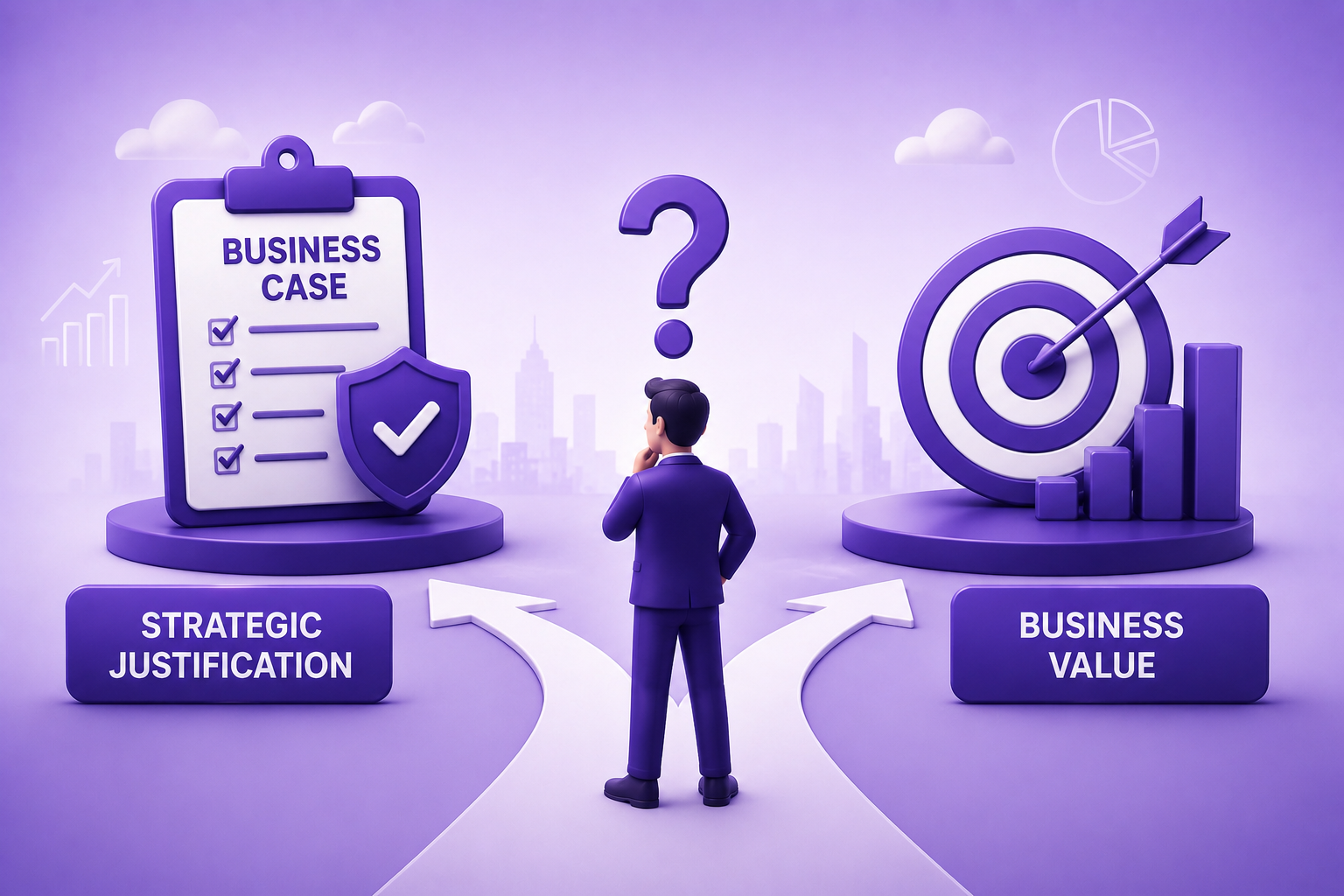
The Program Management Myth That Confuses Thousands of Professionals
“The Program Business Case is prepared before the program starts, so why should the Program Manager care?”
It’s one of the most common misconceptions I encounter while mentoring Program Managers and PgMP® aspirants across the globe.
And honestly…
It sounds logical.
If the organization has already approved the investment, why should the Program Manager revisit the Business Case?
The answer lies in understanding one fundamental difference:
💡 An investment idea is NOT the same as an executable program.
📖 Imagine This…
A global retail organization wants to become a digital-first enterprise.
The Portfolio Review Board approves a strategic initiative called:
“Digital Customer Experience Transformation Program”
A high-level Business Case is prepared.
It includes objectives such as:
✅ Increase online revenue by 30%
✅ Improve customer satisfaction
✅ Reduce operational costs
✅ Complete the transformation within three years
Funding is approved.
Leadership is excited.
Everything looks perfect.
Then…
A Program Manager is appointed.
Should the Program Manager simply say,
“Looks good. Let’s start executing.”
❌ Absolutely not.
That would be one of the biggest mistakes a Program Manager could make.
🎯 This Is Where Program Management Actually Begins
While many believe Program Management begins with execution…
It actually begins with validation.
An experienced Program Manager immediately starts asking questions that nobody asked during the initial investment approval.
🔍 Questions every Program Manager should ask
- 📈 Is the 30% revenue growth still realistic?
- 🎯 Which benefits are actually measurable?
- 📦 Which program components will deliver those benefits?
- ⚠️ What assumptions are no longer valid?
- 🚨 What new risks have emerged?
- 🌍 Has the market changed?
- 🤖 Is AI changing customer expectations?
- 🔄 Do we still need all proposed components?
- 💡 Are there better solution alternatives available today?
Notice something important…
The Program Manager is NOT questioning whether the organization needs the investment.
The Program Manager is questioning whether the approved investment can still deliver the promised business value.
That is a completely different responsibility.
📚 What Does PMI Actually Say?
The Standard for Program Management – Fifth Edition removes any ambiguity.
Within the Strategic Alignment Performance Domain, PMI clearly states:
“During Program Definition, the Program Manager collaborates with key sponsors and stakeholders to develop the Business Case that assesses the program investment against the intended benefits.”
Now pay attention to the wording.
PMI does NOT say:
❌ Read the Business Case
❌ Accept the Business Case
❌ Execute the Business Case
PMI says:
✅ Develop the Business Case
That single statement changes the entire interpretation.
📖 Even Stronger Evidence
Chapter 4 goes one step further.
PMI explains that:
The Program Definition Phase establishes and confirms the Business Case, and during Program Formulation, program activities contribute to the development of the Program Business Case and Program Charter.
Now ask yourself…
If the Program Manager had no responsibility for the Business Case…
🤔 Why would the Business Case be one of the primary outputs of Program Formulation?
Exactly.
📊 From Strategy to Program
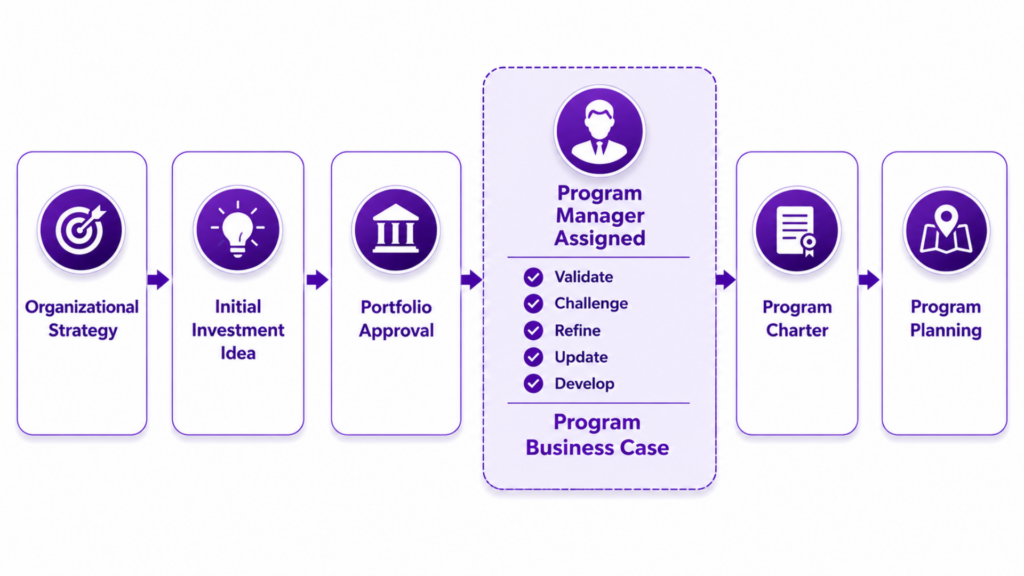
🔄 The Business Case Is NOT a Static Document
One of the biggest myths in Program Management is that the Business Case becomes frozen after approval.
Real-world programs simply don’t work that way.
Business environments evolve continuously.
🌍 What changes?
- 📉 Market conditions
- 🤖 Emerging technologies
- 🏢 Competitive landscape
- ⚖️ Regulations
- 👥 Customer expectations
- 💲 Economic conditions
- 🌱 Organizational priorities
If none of these changes are reflected in the Business Case…
The program may still:
✅ Finish every project on schedule
✅ Stay within budget
Yet…
❌ Completely fail to deliver business value.
That is exactly why PMI treats the Program Business Case as the foundation of Strategic Alignment.
🏢 Think Like a CEO
Imagine your company purchases land to build a shopping mall.
Six months later…
🚇 A metro station is announced nearby.
👨👩👧 Population projections double.
💰 Construction costs increase by 25%.
📈 Commercial demand grows dramatically.
Would any CEO continue using the original Business Case without updating it?
Of course not.
The Business Case would immediately be revised.
The same principle applies to every strategic program.
A Program Manager protects business viability, not just project delivery.
⚠️ What If the Program Manager Isn’t Involved?
The Portfolio Review Board may approve the investment, and the Program Sponsor may secure funding.
But without the Program Manager actively validating and refining the Program Business Case, the program risks moving forward based on outdated assumptions rather than current business realities.
Think back to our shopping mall example.
A CEO would never continue investing in the same plan after learning that a metro station is being built nearby, construction costs have increased, or customer demographics have shifted.
The Business Case would be reviewed immediately.
The same principle applies to programs.
Potential Consequences
🚩 Benefits become unrealistic or outdated
The expected benefits may no longer reflect today’s market conditions, customer expectations, or business priorities, reducing the program’s ability to create real organizational value.
🚩 Business assumptions remain unvalidated
Changes in technology, regulations, competition, or economic conditions may invalidate the original assumptions, yet the program continues as though nothing has changed.
🚩 Strategic risks and opportunities are overlooked
New risks may threaten the expected benefits, while emerging opportunities to increase value may never be explored because no one is challenging the original Business Case.
🚩 The Program Charter is built on weak foundations
Since the Program Charter and Program Management Plan are developed from the Business Case, weaknesses in the Business Case cascade throughout the entire program.
🚩 The program slowly drifts away from strategy
The organization may evolve, but the program continues executing yesterday’s priorities instead of today’s strategic objectives.
🚩 Projects succeed, but the program fails
Every project may be delivered on time, within scope, and within budget…
Yet the program still fails because the intended business benefits are never realized.
A CEO doesn’t revisit a Business Case because they doubt the original decision. They revisit it because the business environment has changed.
A Program Manager should do exactly the same.
📊 Why the Business Case Matters
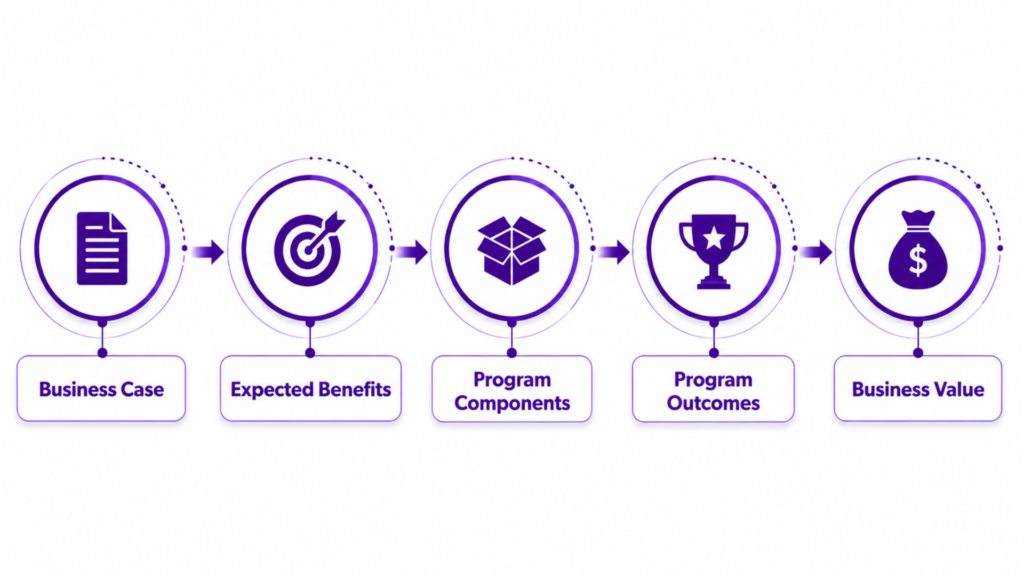
If the Business Case changes…
Everything beneath it may need adjustment.
👥 So… Who Really Owns the Program Business Case?
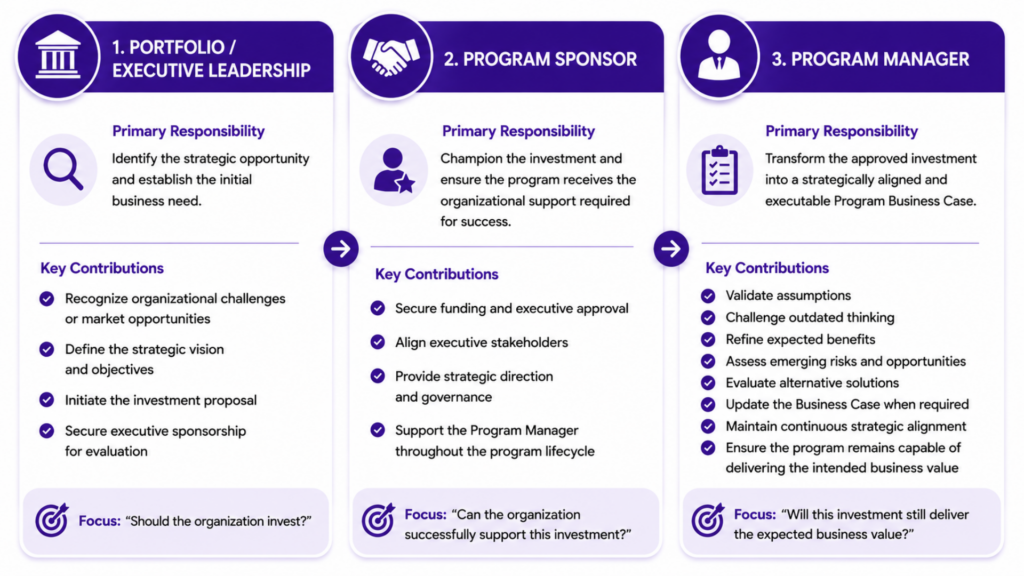
⚠️ This is NOT about document ownership.
It is about VALUE OWNERSHIP.
🎯 Key Takeaways
Remember these five points:
✅ The initial investment idea may originate from Portfolio Management or Executive Leadership.
✅ The Program Manager does NOT simply inherit the Business Case.
✅ The Business Case becomes a living strategic document throughout the Program Life Cycle.
✅ The Program Manager continuously validates, challenges, refines, updates, and aligns the Business Case with organizational strategy.
✅ Successful Program Managers don’t just deliver projects…
They ensure every dollar invested continues to create measurable organizational value.
📚 References
PMI® – The Standard for Program Management, Fifth Edition
📖 Section 3.3.1 – Program Business Case
📖 Section 4.2.1 – Program Formulation Activities
Leave a Reply