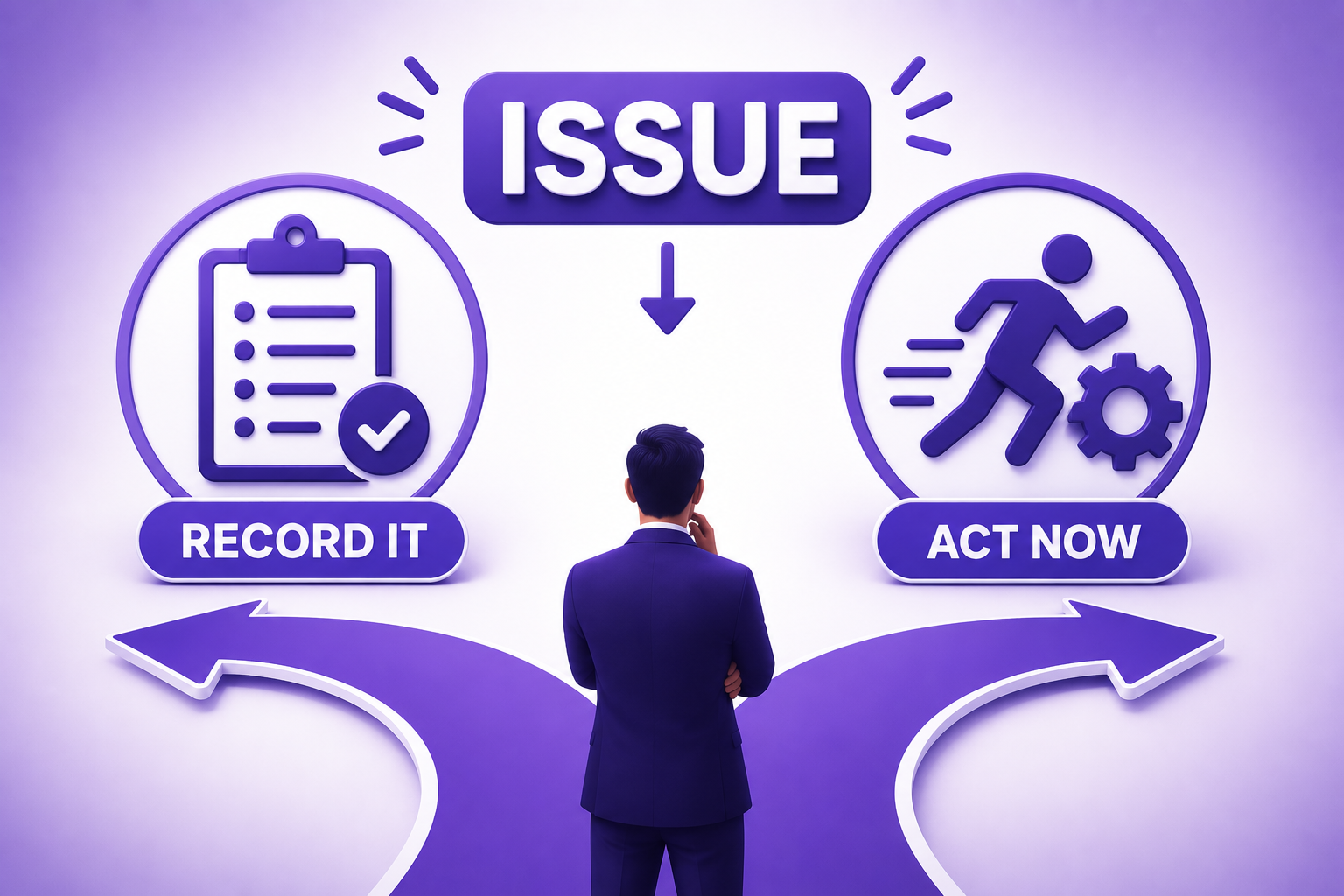
Many professionals assume the correct sequence is always: log the issue → analyze → act.
But at the program level, that thinking can actually delay value delivery.
The real anchor is simple: benefits realization comes first, process follows.
🚨 Why “Log First” Can Be Risky
Logging an issue sounds simple, but in reality, it takes time to:
- 📝 Capture full context
- 🔍 Assess impact properly
- 👥 Align ownership
- 🧭 Fit within governance structure
Now imagine a live issue already impacting benefits…
👉 While you’re documenting, the damage continues.
Key insight:
⏱️ Delaying action for the sake of logging can directly erode program benefits.
⚡ When Immediate Action Is the Right Move
If an issue:
- 🔥 Is actively impacting or threatening benefits
- ⏳ Requires urgent containment
- 🎯 Falls within your authority
Then:
- ⚡ Act first
- 🤝 Engage stakeholders quickly
- 🛠️ Stabilize the situation
And then:
- 📘 Record it in the issue register
- 🏛️ Align with governance
👉 Action protects value. Documentation preserves discipline.
🔄 The Missing Layer: Issues → Tactical Responses
Here’s the deeper PgMP nuance most people miss:
👉 Issues don’t just get logged; they trigger corrective actions
👉 And those actions are often tactical changes
For example:
- ⚙️ Adjusting execution approach
- 🔁 Reallocating resources
- ⏱️ Changing sequencing
- 🛠️ Implementing corrective fixes
These are:
- 🎯 Focused
- ⚡ Time-sensitive
- 🧩 Within program control
👉 Which means the program manager can usually authorize them directly
⚖️ Performance Variance & Decision Authority
Many issues originate from:
👉 📉 Performance variances (cost, schedule, scope, benefits)
Now here’s the critical distinction:
🟢 Within Threshold (No Escalation Needed)
- 📊 Impact is manageable
- 🎯 Benefits are still recoverable
- 🔧 Corrective action is contained
👉 Program manager:
- ⚡ Takes immediate action
- 🛠️ Applies tactical changes
- 📘 Logs afterward
🔴 Beyond Threshold (Escalation Required)
- 📉 Benefits realization is significantly at risk
- 🔀 Requires reprioritization or re-baselining
- 💰 Needs additional funding or strategic decision
👉 Now it’s no longer just tactical
👉 It becomes a strategic decision, requiring:
- 🏛️ Sponsor / Steering Committee involvement
🧠 The Real PgMP Mindset Shift
Stop thinking:
- ❌ Issue = log first
- ❌ Issue = always tactical
- ❌ Change = always strategic
Start thinking:
- ✅ What is the impact on benefits?
- ✅ Is this within my decision authority?
🎯 Exam & Real-World Anchor
- 🔥 Urgent + within authority → Act first, log next
- 🌱 Non-urgent → Log, analyze, then act
- 🚨 Beyond authority → Escalate for governance decision
And always:
- 📌 Documentation is mandatory
- ⏱️ But it should never delay value protection
💡 Final Takeaway
A mature program manager balances two forces:
- 🏛️ Governance Discipline → record, track, control
- 💰 Benefits Realization → protect value, act fast
When they conflict:
👉 Protect the benefits first. Then restore governance discipline.
That’s not just good practice,
👉 That’s exactly the level of thinking PgMP is designed to test.
That’s all in this article. Once again, thank you for being part of this newsletter series. I kindly ask for your continued support. Liking, sharing, and subscribing to this newsletter series is a simple yet powerful way to show your appreciation. By doing so, you not only help me reach a wider audience but also contribute to building a thriving community of knowledge seekers and enthusiasts.
With heartfelt gratitude,
Leave a Reply