Here’s a question for project and program professionals:
What happens when your team consistently outperforms the baseline?
Sounds like a good problem to have, right?
But what if that “better-than-plan” performance continues month after month?
At some point, should you still call it exceptional performance?
Or has your baseline become outdated?
During a consulting assignment with a manufacturing organization, I saw this exact situation.
The plant’s production baseline was 1,000 units per day.
Through process improvements, automation, and better cross-functional collaboration, the team consistently achieved 1,300 units per day without compromising quality.
Naturally, leadership was pleased.
But during a performance review, I asked a simple question:
“If 1,300 units per day has become the norm, why are we still measuring success against 1,000?”
The room went silent.
Month after month, the organization was reporting positive variance.
Month after month, it was celebrating performance that had already become routine.
The problem wasn’t performance.
The problem was the baseline.
We often think about baselines as something that should be protected from change.
But there is another side to the conversation.
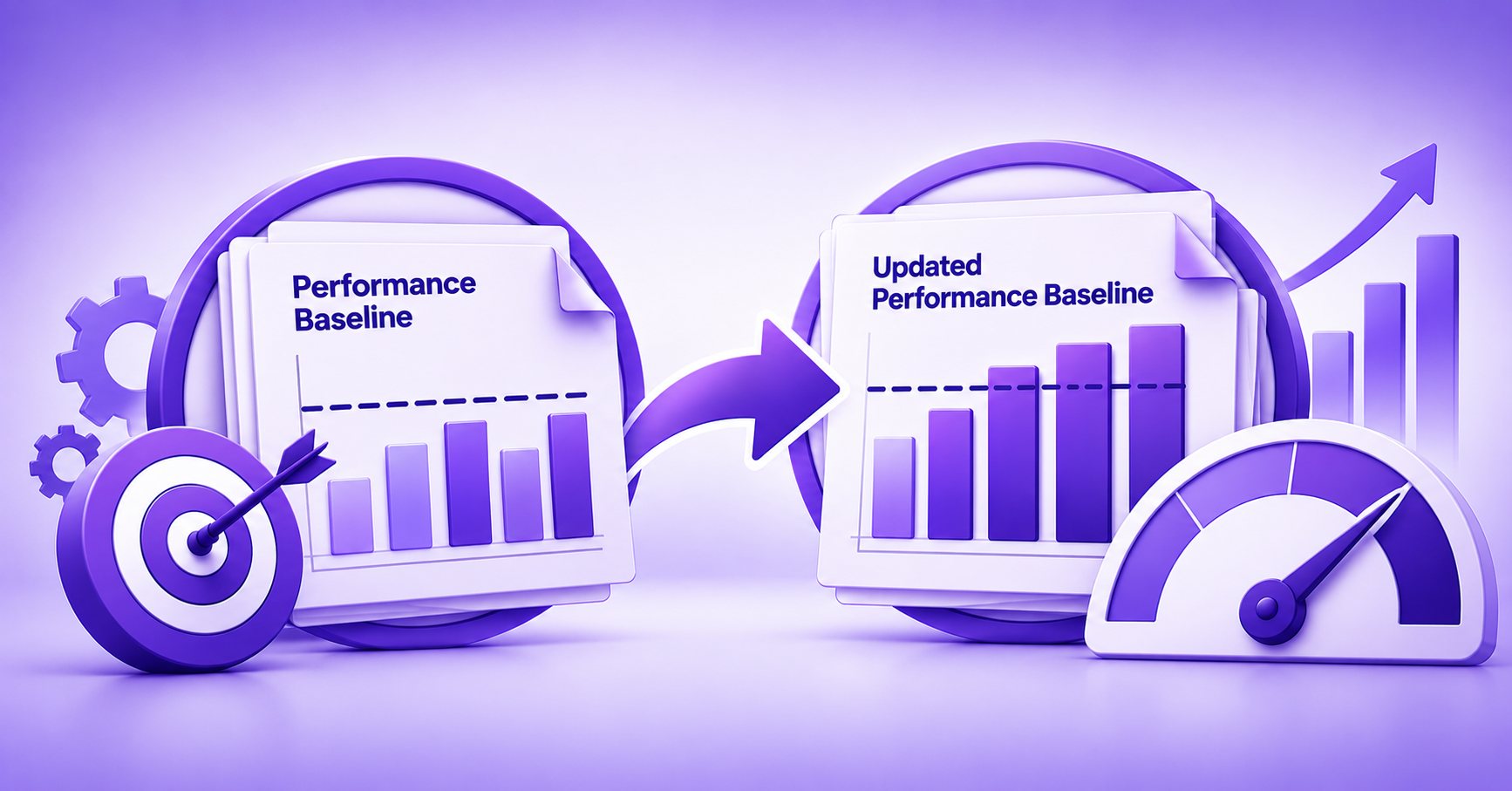
A baseline should help us understand current performance against an agreed reference point. When the organization has demonstrated a sustained and repeatable improvement, continuing to measure against an outdated reference point can distort the performance conversation.
So, together with the leadership team, we updated the baseline to reflect the organization’s new reality.
And something interesting happened.
The conversation changed.
Instead of asking:
“Why are we performing 30% above plan?”
Leadership could now ask:
“What is the next level of performance we should be targeting?”
That shift is important.
Because a baseline shouldn’t become a permanent monument to the past.
It should remain relevant to the reality against which performance is being managed.
Here’s the thought I want to leave you with:
Should a baseline change when performance improves consistently?
The answer isn’t simply “yes.”
A baseline shouldn’t be changed merely because a team has one good month or because someone wants the numbers to look harder.
But when improved performance becomes sustained, repeatable, and accepted as the new operating reality, it may be time to reconsider whether the existing baseline still serves its purpose.
This distinction matters across P3M.
Whether you’re managing cost, schedule, productivity, capacity, quality, benefits, or other performance measures, ask yourself:
Are we managing against today’s reality, or are we still measuring ourselves against yesterday’s limitations?
Because what was exceptional yesterday may eventually become the benchmark for tomorrow.
And perhaps the real sign of improvement isn’t that you’re constantly beating the baseline.
Perhaps it’s knowing when the baseline itself needs to evolve.
What do you think?
Should consistently improved performance trigger a baseline review?
Share your perspective in the comments. I’d particularly like to hear how project, program, and portfolio professionals handle this in their organizations.
Leave a Reply